
Polyester woven in Bishu, Japan’s wool-producing region

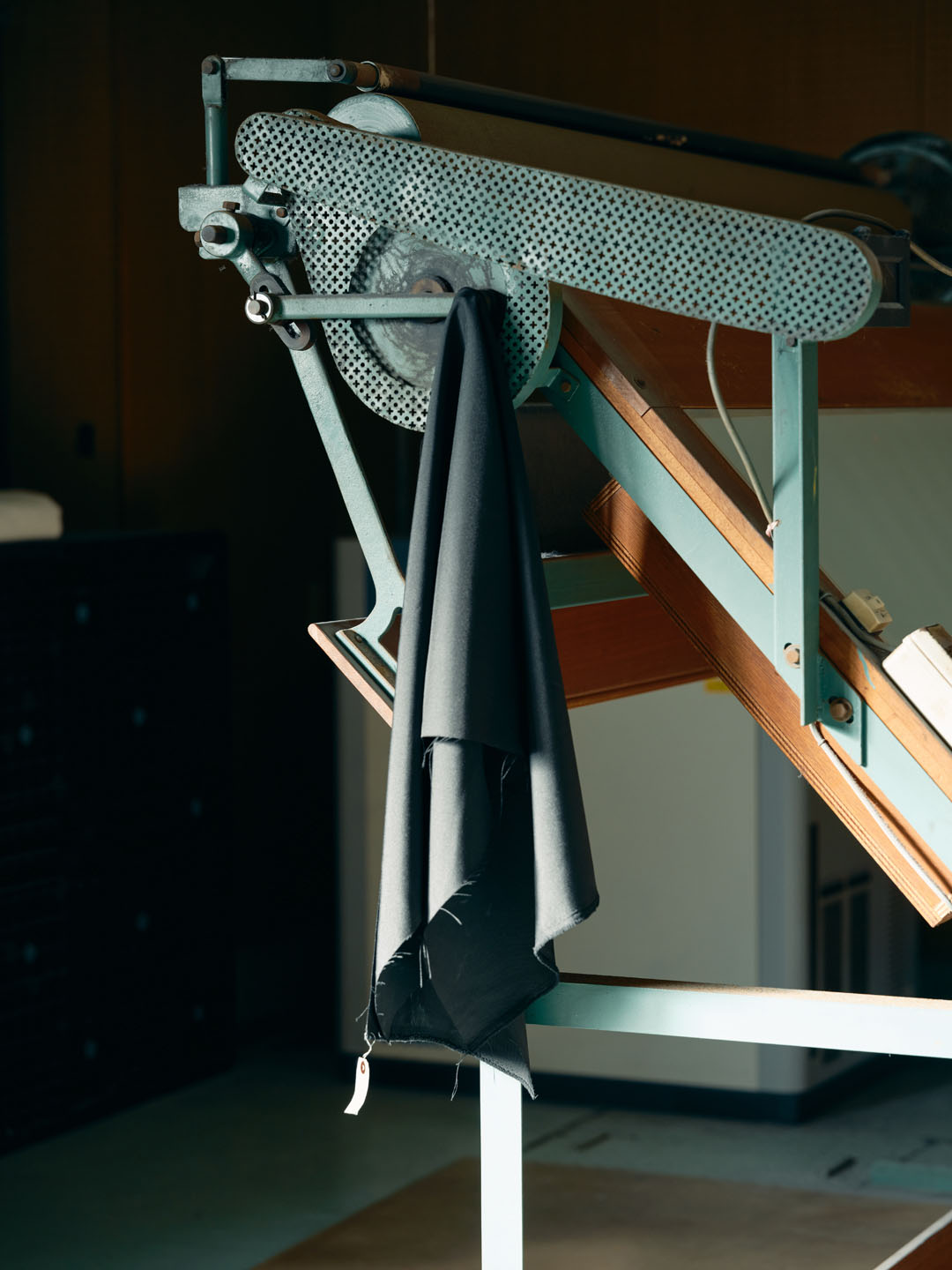
Making classic garments with polyester.The Polyester Twill Club Jacket began with that idea. Lightweight and uniform, polyester offers quick-drying properties and resistance to wrinkles, making it widely used in sportswear and outdoor wear. At the same time, it has characteristics that differ somewhat from fabrics typically used in tailored clothing. What Nanamica set out to do was transform this material into a fabric with a refined, structured appearance. By combining the functionality of sportswear with the techniques of traditional weaving, the goal was to create a natural look that works as everyday clothing. The place chosen to weave this fabric was Bishu, one of Japan’s leading wool-producing regions.

The wool-producing region of Bishu
The Bishu region in Aichi Prefecture is known as one of Japan’s leading regions for producing wool textiles. It developed as a cotton weaving area during the Edo period, and with the introduction of wool culture from overseas in the Meiji era, it grew into a major production area for apparel fabrics. Today, it is counted among the world’s three major wool-producing regions alongside Biella in Italy and Huddersfield in England. Processes such as yarn preparation, dyeing, weaving, and finishing are carried out through regional specialization, and textile techniques have been cultivated over a long period of time.
Bishu has long been known as a center for wool. Precisely for that reason, the idea of weaving polyester — a material with a uniform, industrial impression — in this region carries a certain sense of contrast. The aim was to transform a synthetic fiber into a fabric with a sense of breath, like wool. From that idea came the concept of weaving polyester in Bishu.
Where the sound of looms resonates
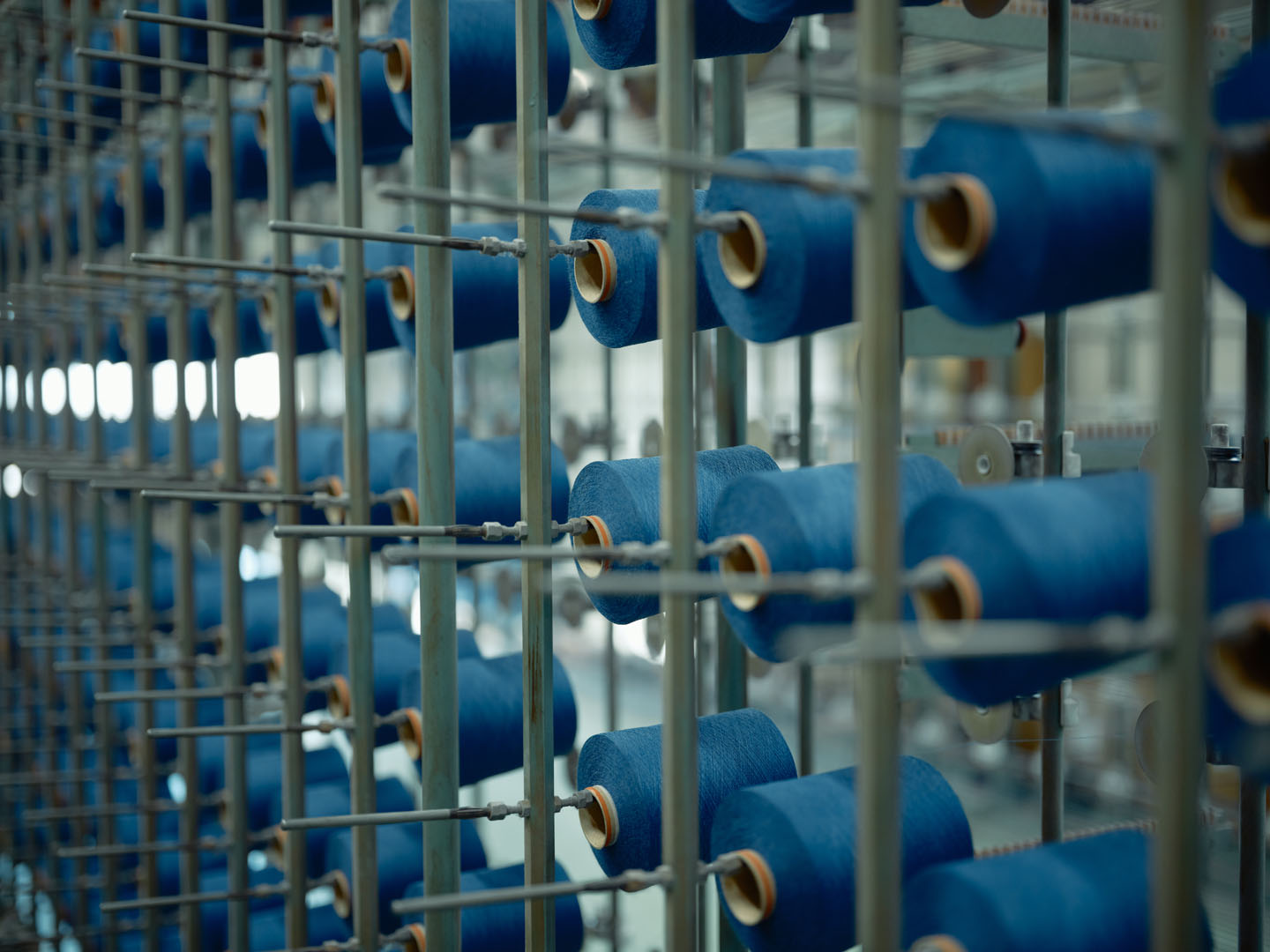
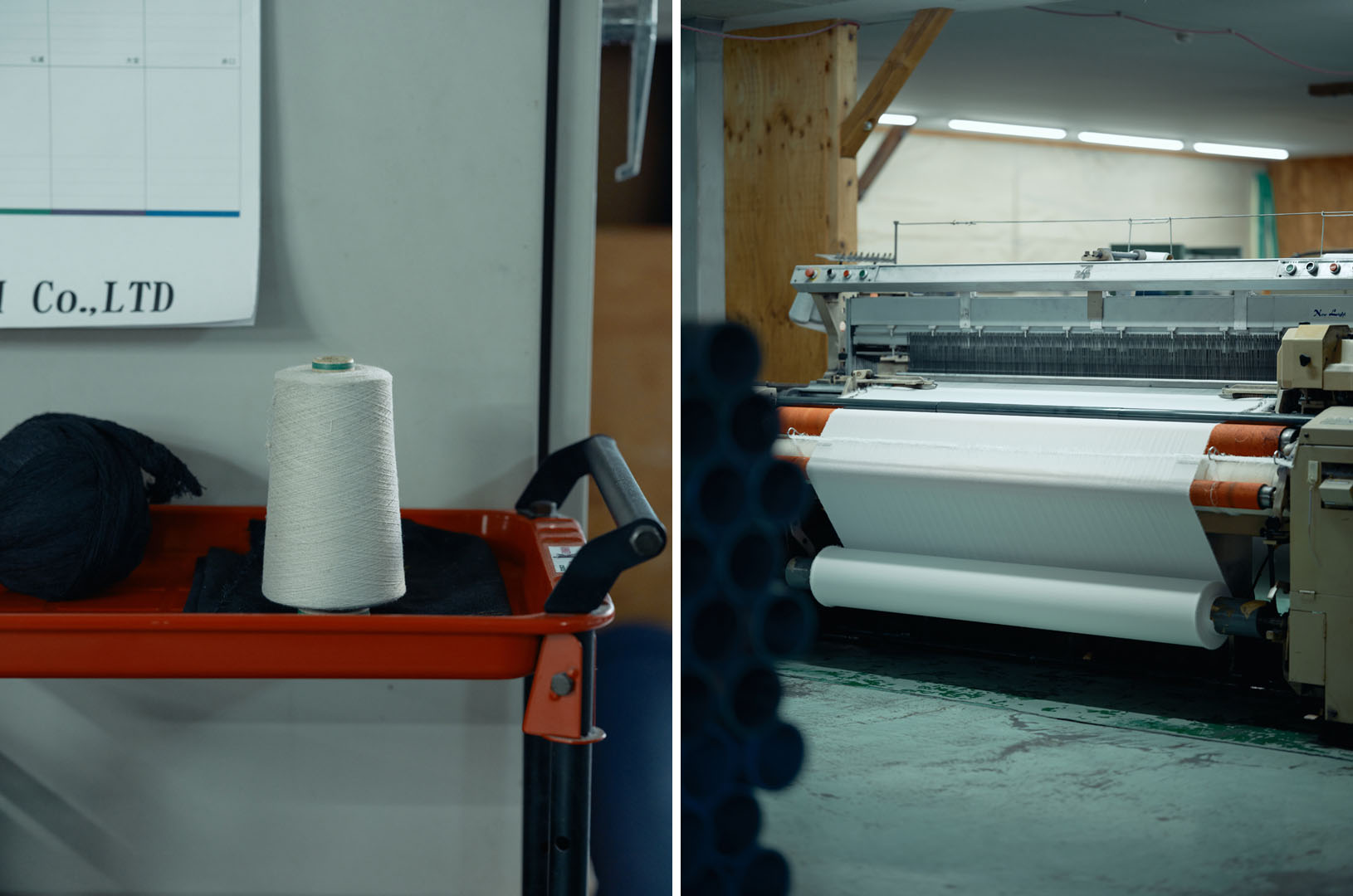
The fabric for this project is woven at factory in Bishu. Textile production proceeds through several stages. First is a process called warping, where yarn wound on cones is drawn out and wound onto a large beam under uniform tension. This collection of warp threads forms the width of the fabric.
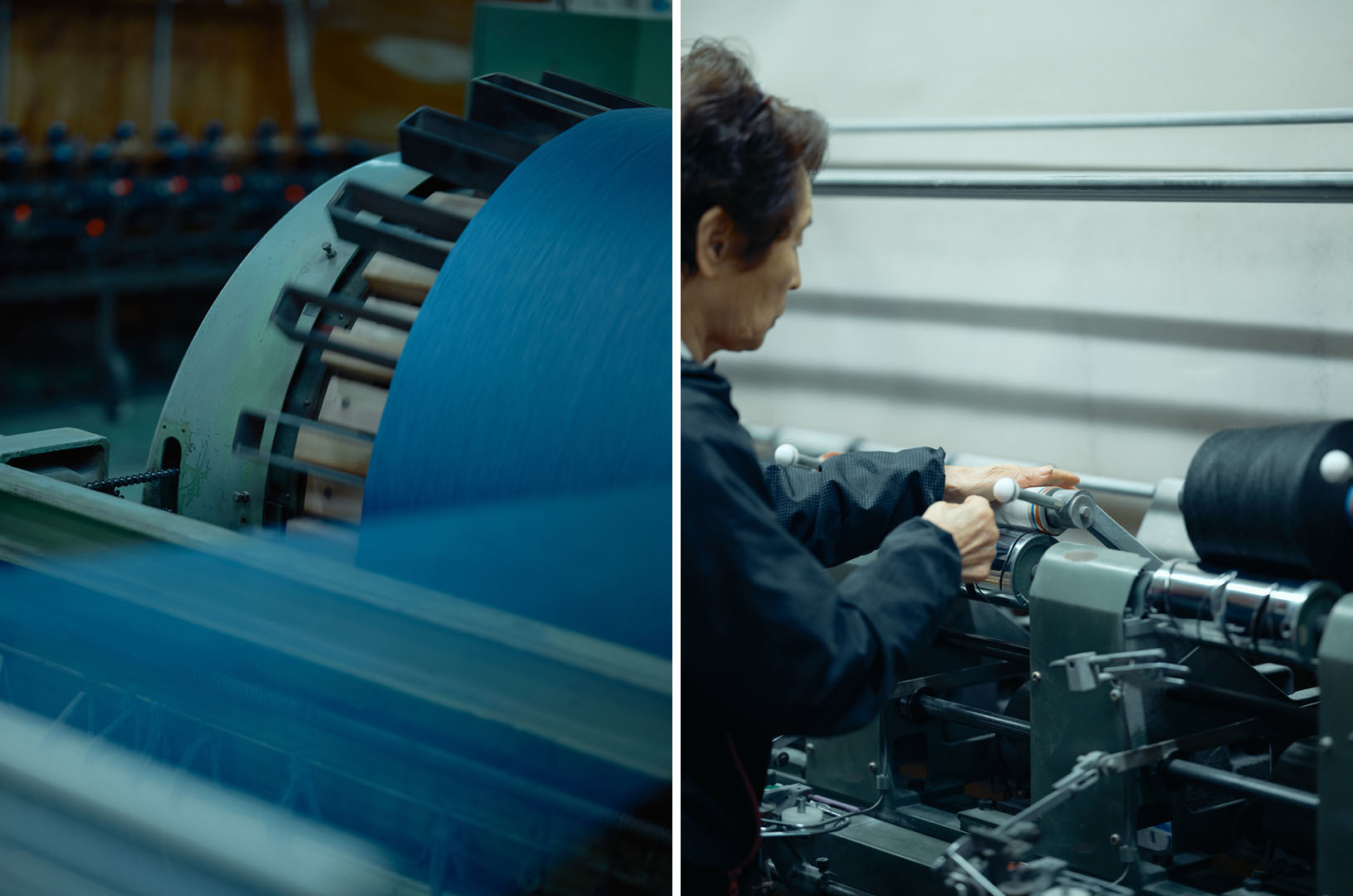
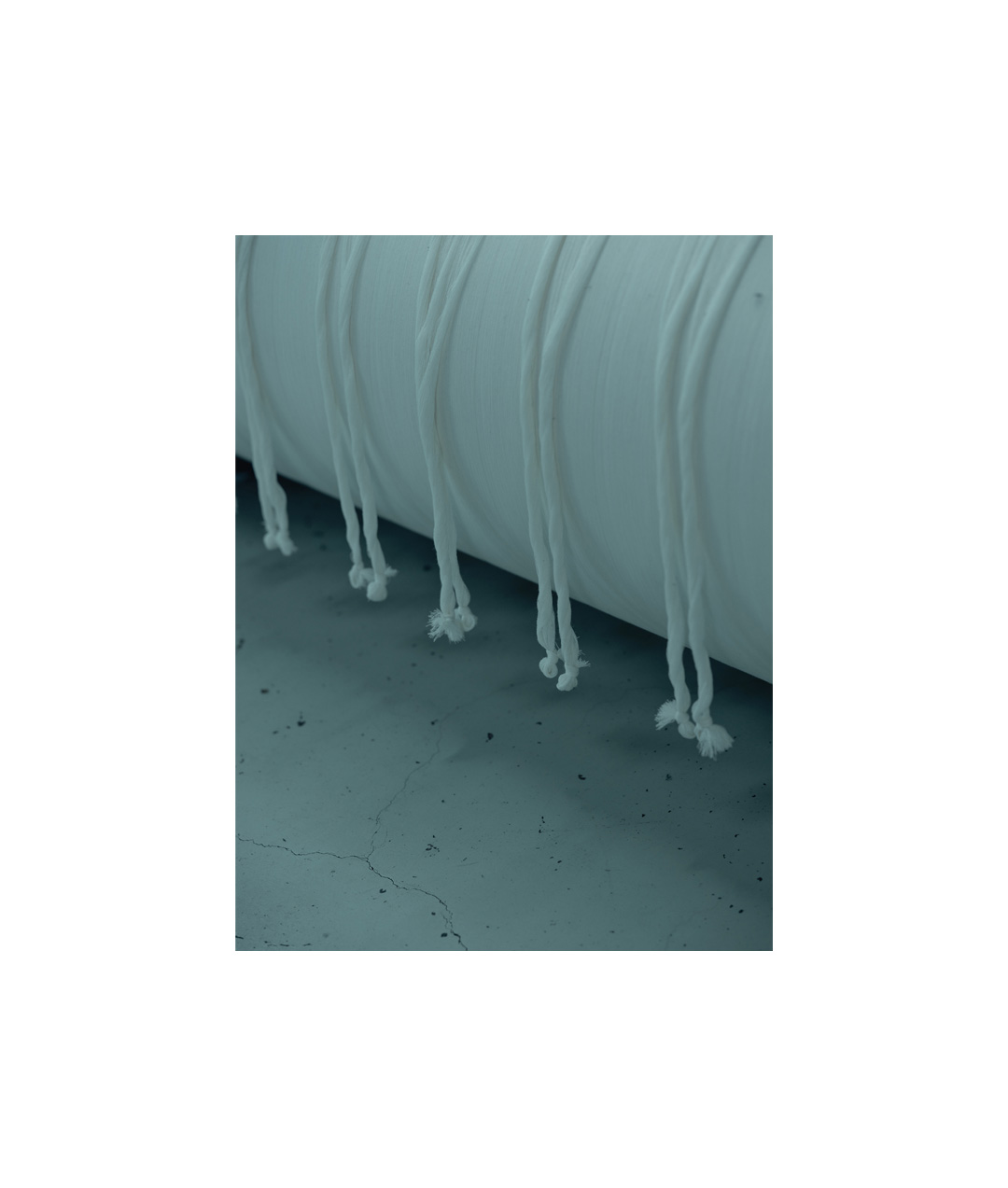
Next comes the process known as drawing-in. The warp threads are passed through the loom components — droppers, heddles, and the reed. The way they are arranged determines the structure of the fabric, such as plain weave or twill. The threads are then set on the loom, and the fabric is woven as the weft yarn is inserted.
Currently, eight Rapier looms are in operation at this factory. They allow for stable, consistent weaving while minimizing stress on the yarn, making them well suited for producing fabric for garments.
Polyester yarn, which tends to be smooth and flat, takes on a different character when handled by Bishu’s looms and skilled craftspeople. It gains a subdued sheen and a slight fullness, giving it texture. Through the act of weaving, the expression of the material changes — that is where the craftsmanship of Bishu lies.
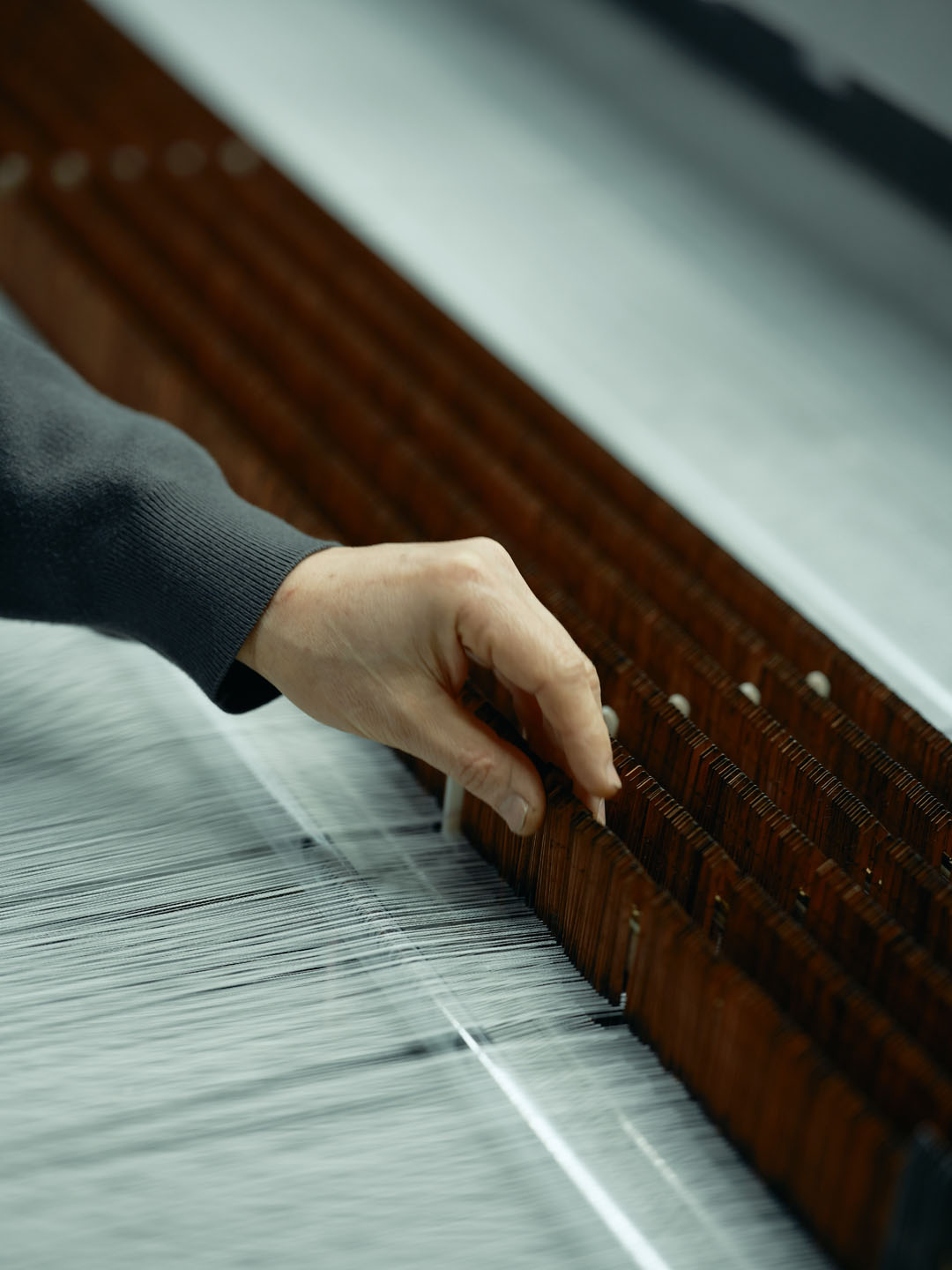
For this fabric, recycled PET yarn is used for the warp, while the weft is made from a moisture-absorbing, quick-drying yarn with a fancy cross-sectional shape. Using this yarn for the weft gives the fabric moderate absorbency and a comfortable feel when worn. Both the warp and weft use 150d/2 double yarn, set with a relatively low twist of 200 turns in reverse twist. By keeping the twist lower than usual, the yarn retains a sense of volume and softness.
Along with a thickness suited to expressing a twill structure, the use of double yarn and low twist results in a rich, refined texture with depth.
An authentic presence with functional materials
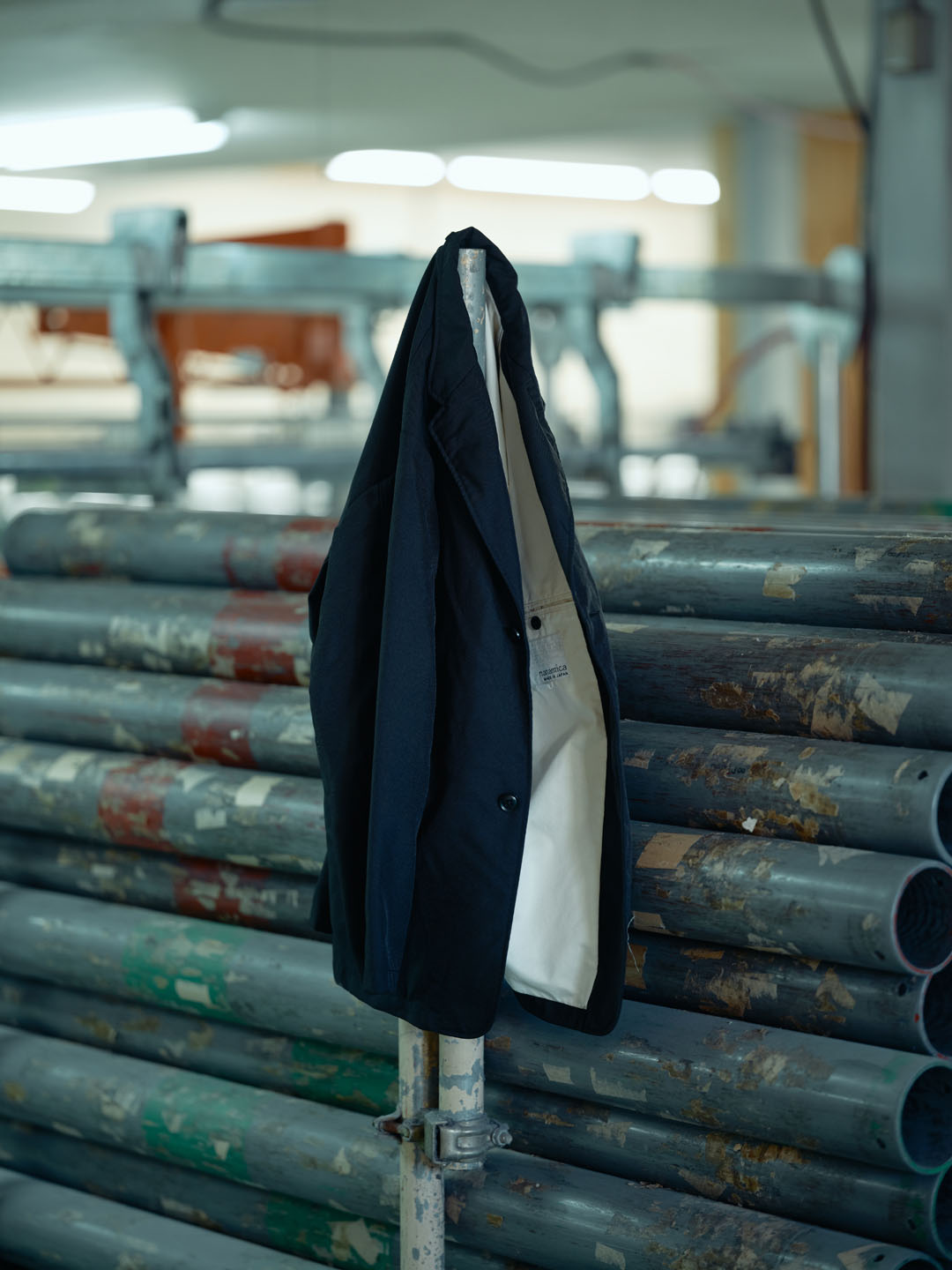
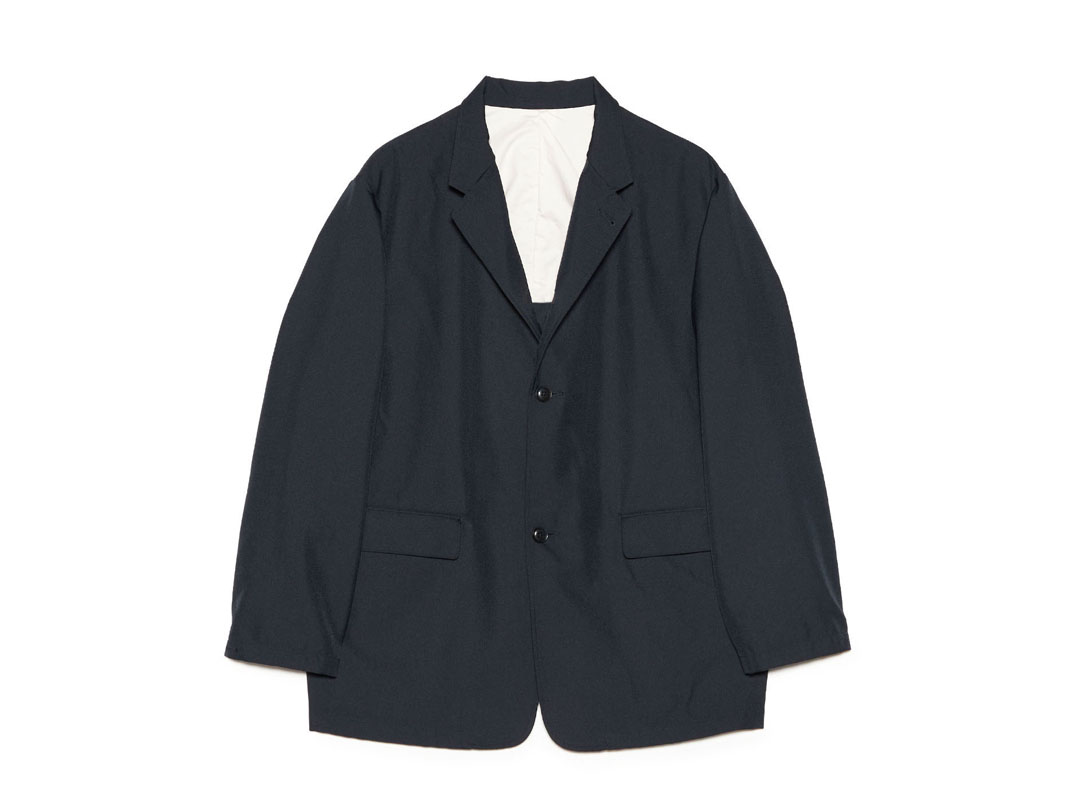
The polyester twill woven in this way is then tailored into a jacket, bringing it to completion. Its appearance is clean and classic. At the same time, it carries both the lightness unique to a functional material and the depth of expression created through Bishu’s textile craftsmanship. Though an industrial material, the fabric has a softness to it, with a quality that feels like it breathes.
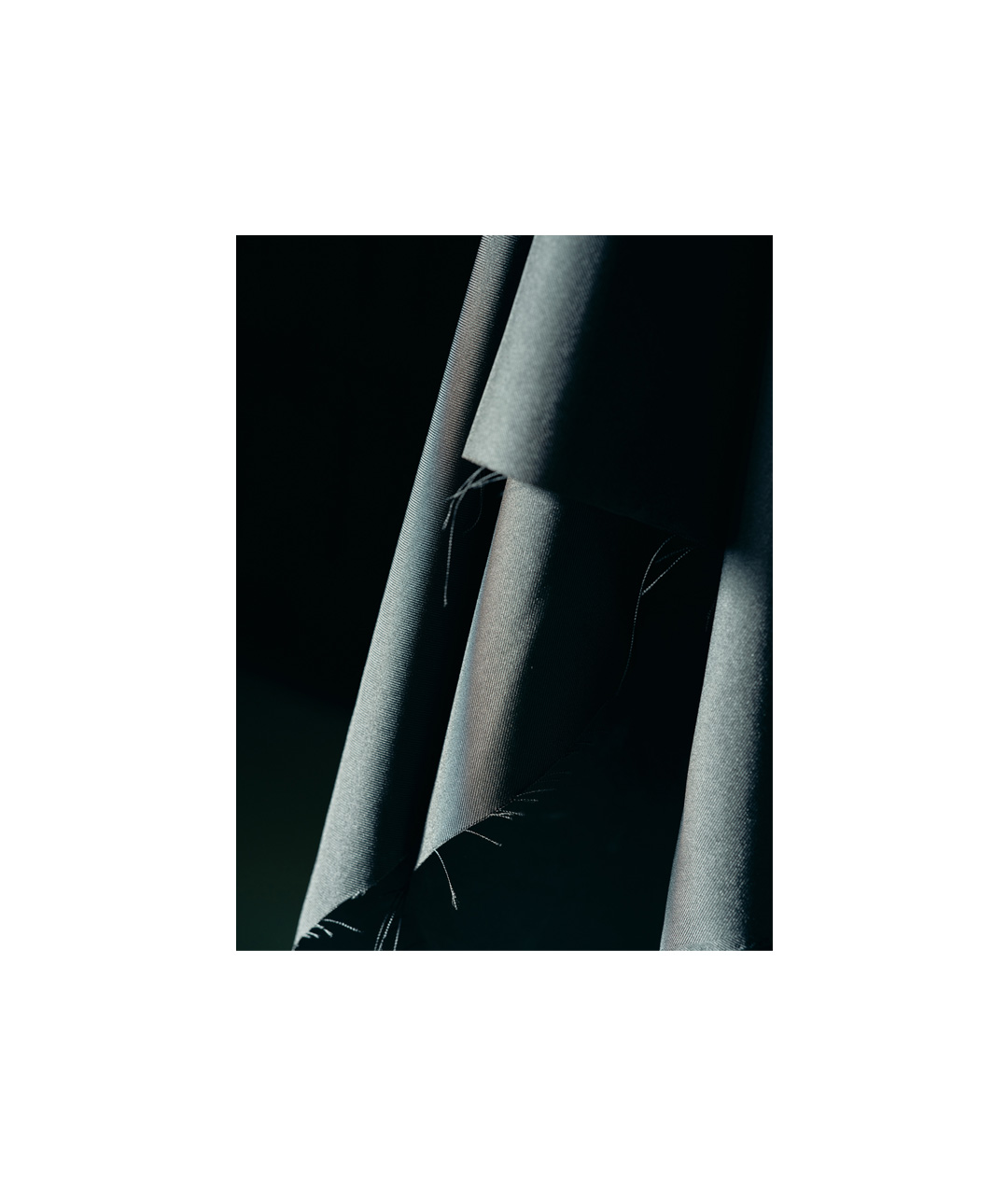
It’s not the yarn itself, but the texture created through the weaving that makes this piece feel natural as everyday clothing. An authentic presence paired with functional materials. Where romance and reality overlap, the Polyester Twill Club Jacket was born.